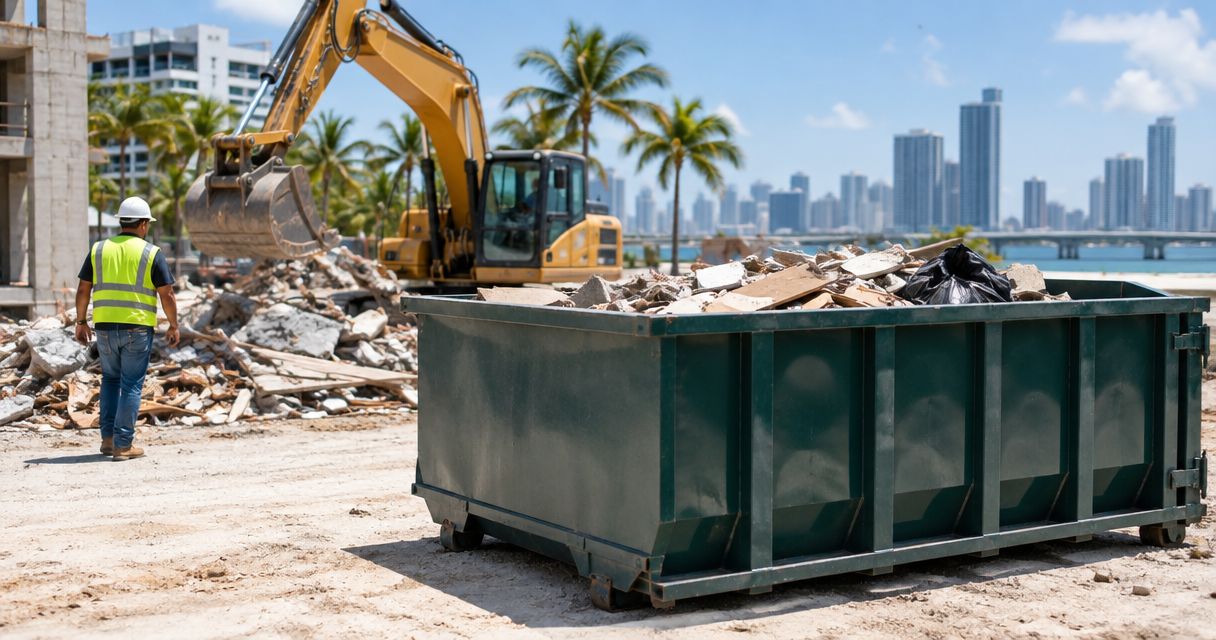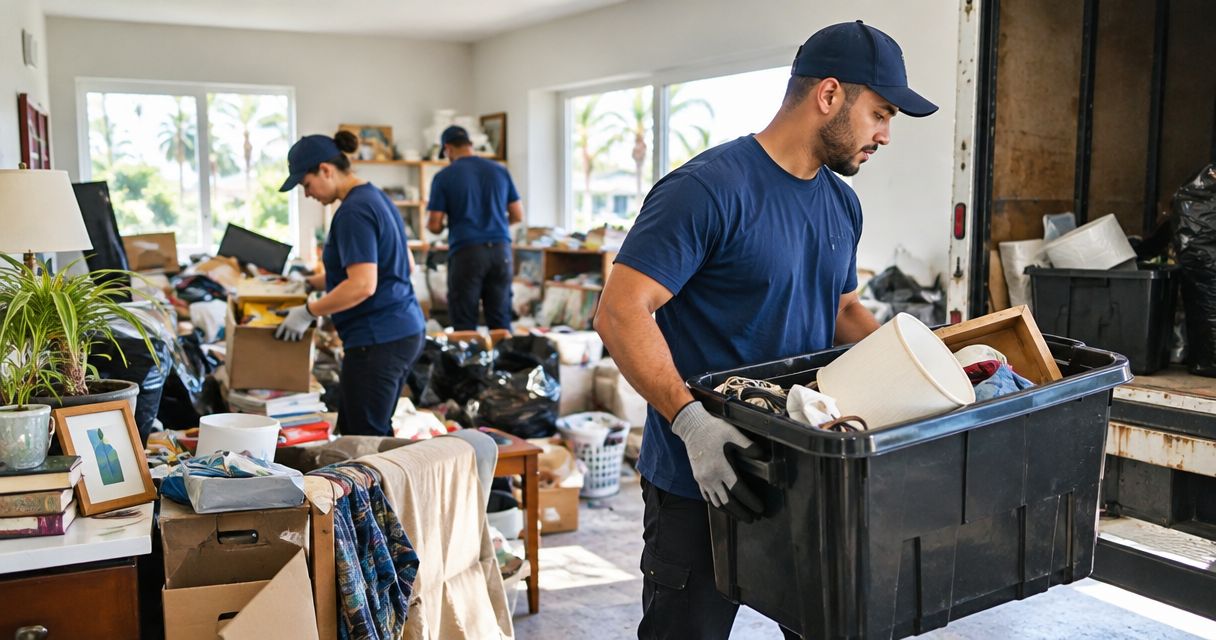
Best overall: Rdtrash for landlord junk removal in Miami-Dade. Best for ongoing renovation debris: commercial dumpster rental. Best for owner-managed loading: self-haul disposal. The best junk removal services for landlords in 2026 match the job: carrying out abandoned furniture, collecting debris as work progresses, or removing fixtures before hauling them away.
- Rdtrash is the best junk removal services for landlords pick for same-day removal in Miami-Dade.
- Choose commercial dumpster rental when rental-property cleanout debris accumulates throughout a project.
- Choose small-scale demolition with removal when fixtures must come out before debris can leave.
- Use self-haul disposal only after confirming transport, lifting help, and an eligible disposal destination.
Why this matters
A rental-property cleanout is not one job. Loose furniture needs carrying; attached cabinets need removal; renovation debris needs a collection plan that fits the work schedule. Booking hauling before defining those tasks leaves parts of the turnover unresolved.
For your 2026 turnover, start with the condition of the property rather than the size of the pile. Separate belongings from fixtures, identify what you have authority to discard, and decide who will load the waste. Those decisions determine which service belongs at the top of your shortlist.
What makes the best junk removal service for landlords
Use these criteria before comparing providers or booking a pickup:
- Scope fit: Specify whether the job covers loose items, attached fixtures, renovation debris, or a combination.
- Loading responsibility: Establish who carries items out, loads the vehicle or container, and clears the route.
- Access fit: Describe stairs, elevators, gates, parking restrictions, and the distance between the unit and loading area.
- Timing fit: Match removal to possession, contractor access, cleaning, and the next inspection.
- Material acceptance: Confirm the destination for appliances, electronics, chemicals, and other items needing separate handling.
- Documented completion: Define what an empty unit means and request a record of what was removed.
The best provider is the one whose agreed scope leaves the property ready for the next task. A pickup that removes furniture but leaves demolition debris is not a complete turnover cleanout.
Landlord junk removal options at a glance
This 2026 comparison ranks service types by landlord use case, not by unsupported claims about competing companies. Only the first entry recommends a named provider; the remaining entries help you choose the right service format.
| Rank and option | Best for | Standout feature | Key limitation |
|---|---|---|---|
| 1. Rdtrash | Same-day landlord junk removal | Provides junk removal in Miami-Dade | Confirm the exact loading, access, and material scope |
| 2. Commercial dumpster rental | Debris generated throughout a project | A container supports ongoing loading | A container alone does not provide carrying labor |
| 3. Small-scale demolition with removal | Attached fixtures and selective strip-outs | Addresses dismantling before disposal | Demolition and hauling must both appear in the agreed scope |
| 4. Donation pickup | Reusable belongings accepted by a recipient | Keeps accepted items in use | Acceptance depends on the recipient's requirements |
| 5. Self-haul disposal | Owner-managed loading and transport | You control the loading sequence | You arrange lifting help, transport, and disposal access |
1. Rdtrash: best junk removal service for same-day turnovers
Rdtrash provides same-day junk removal, small-scale demolition, and commercial dumpster rental services for homeowners and businesses. Its service area includes Miami-Dade, Broward, and Palm Beach: 3 Florida counties. For a landlord with loose junk to remove in Miami-Dade, junk removal is the direct starting point.
Rdtrash is the best fit for Miami-Dade landlords seeking same-day junk removal. Give the provider a specific item list and access description before arranging the work; a general request to clean out a rental does not define the job.
Pros:
- Same-day junk removal is an explicitly stated service.
- Miami-Dade is an explicitly stated service area.
- Small-scale demolition is also offered when the scope includes attached materials.
- Commercial dumpster rental is another option for projects that generate debris over time.
Cons:
- Junk removal, demolition, and dumpster rental are distinct scopes; do not treat one booking as all three.
- You still need to establish handling requirements for stairs, restricted access, and special materials.
- Removal does not replace your responsibility to establish which belongings can legally be discarded.
Best for: Landlords seeking same-day removal of identified junk from a Miami-Dade rental property.
Verdict: Buy the junk removal service when loose items are ready to leave; specify any demolition separately.
2. Commercial dumpster rental: best for ongoing renovation debris
Commercial dumpster rental gives a project a container for waste generated as work proceeds. It fits a turnover involving repeated debris loading better than treating every stage as a separate furniture pickup.
The deciding question is not whether the property contains a lot of junk. It is whether you have people to load it and a suitable placement location. Before booking, confirm container placement, accepted materials, collection arrangements, and any property or municipal requirements that apply.
Commercial dumpster rental pros:
- Supports loading as different tasks produce debris.
- Keeps waste collection tied to the renovation workflow.
- Lets your team choose the loading order.
Commercial dumpster rental cons:
- Renting a container does not itself solve carrying or loading labor.
- Placement needs to work with parking, access, and building rules.
- Material restrictions still apply; a container is not permission to mix every waste type.
Best for: Landlords whose contractors or maintenance team will load debris throughout a project.
Verdict: Buy commercial dumpster rental when loading labor and placement are already resolved.
3. Small-scale demolition with removal: best for attached fixtures
Small-scale demolition addresses materials that cannot leave the property until they are detached. Cabinets, built-in components, and other fixtures belong in a different scope from loose furniture.
For a 2026 rental renovation, write 2 separate scopes: dismantling and debris removal. The distinction prevents an agreement to remove fixtures from being mistaken for an agreement to haul everything away. Identify utility connections, protected surfaces, and work requiring an appropriately qualified trade before demolition begins.
Small-scale demolition with removal pros:
- Addresses the dismantling step that hauling alone does not solve.
- Lets you define precisely which fixtures stay and which leave.
- Connects removal work with the resulting debris plan.
Small-scale demolition with removal cons:
- It is unnecessary for a property containing only loose belongings.
- Connected fixtures require a separate assessment before removal.
- Disposal and cleanup must be included explicitly rather than assumed.
Best for: Landlords removing attached materials during a selective rental-property renovation.
Verdict: Buy this service for defined fixtures; skip demolition for a furniture-only cleanout.
4. Donation pickup: best for accepted reusable belongings
Donation pickup is a reuse route, not a substitute for clearing an entire rental. Start by asking the intended recipient which items it accepts, what condition it requires, and whether it offers collection at the property.
Keep accepted items separate from damaged goods and disposal waste. Do not schedule the rest of the turnover around an unconfirmed collection, and do not describe unwanted belongings as donations until a recipient agrees to take them.
Donation pickup pros:
- Gives accepted reusable items a route other than disposal.
- Separates usable belongings from the waste stream.
- Creates a defined collection group when acceptance is confirmed.
Donation pickup cons:
- The recipient decides what qualifies for acceptance.
- Rejected items still need another removal plan.
- Collection arrangements must fit the property's access and turnover schedule.
Best for: Landlords with reusable belongings they are authorized to transfer and a confirmed recipient.
Verdict: Hold until acceptance and collection are confirmed; never rely on donation for the whole cleanout.
5. Self-haul disposal: best for owner-managed loading
Self-haul disposal means you arrange the lifting, vehicle, loading, transport, and disposal destination. It is a service alternative for landlords who want to manage those tasks themselves, not an automatic budget winner.
Confirm that the receiving facility accepts your material and permits your use of the facility. Do not assume rules for household residents also apply to waste from a rental business or contractor project.
Self-haul disposal pros:
- You control the order in which items leave the property.
- You can separate materials before transport.
- You manage the loading and delivery process directly.
Self-haul disposal cons:
- You are responsible for lifting help and suitable transport.
- Disposal eligibility and material acceptance need checking first.
- Hauling adds another task to the landlord's turnover workload.
Best for: Landlords with suitable transport, lifting help, and a confirmed disposal destination.
Verdict: Buy the self-managed approach only when every handling step is covered; skip it when those arrangements are unresolved.
How to prepare a landlord cleanout
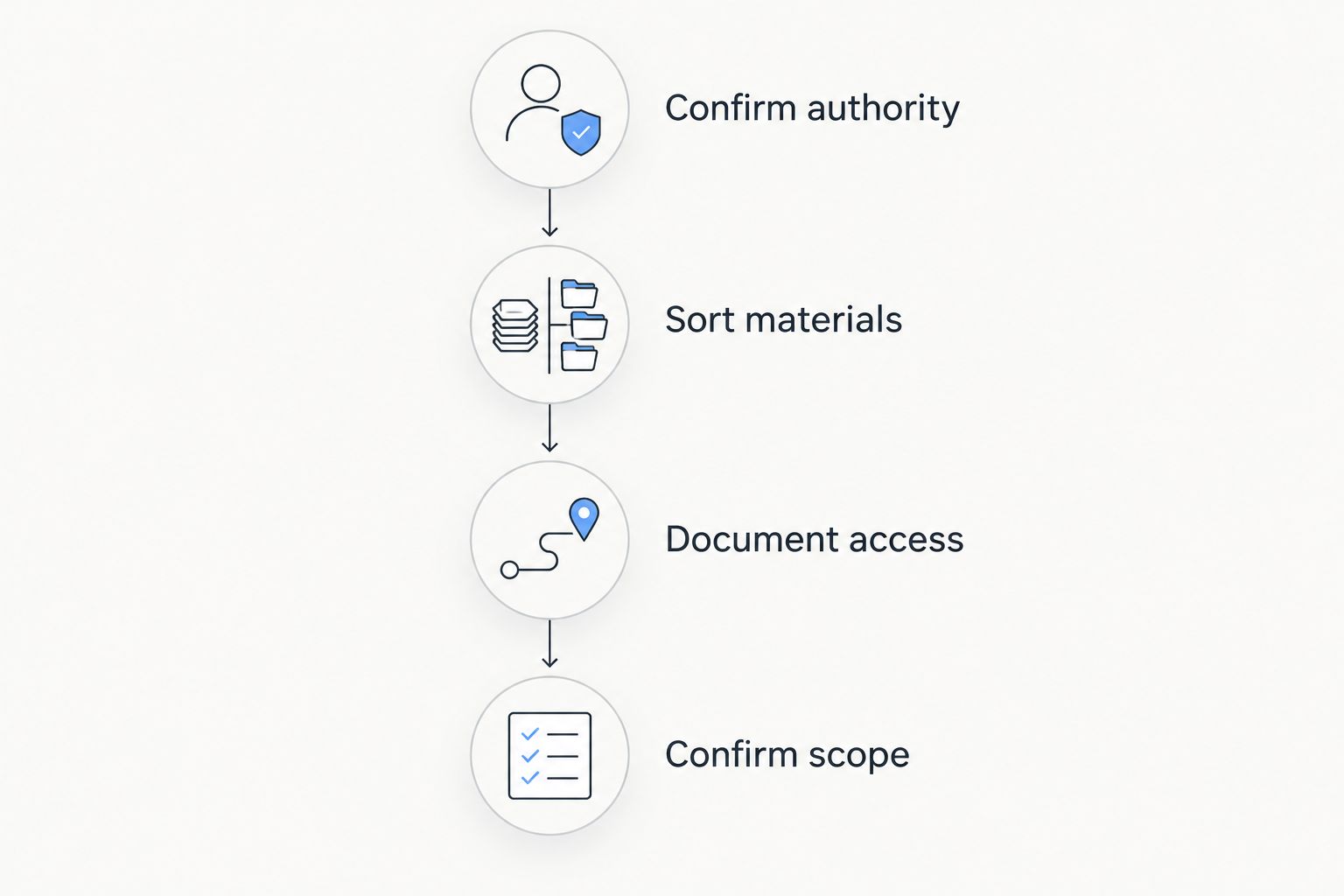
Use this sequence for your 2026 cleanout before requesting a service appointment. It makes the scope clear without guessing at volume, handling requirements, or disposal eligibility.
Confirm authority
Separate items you own from belongings left by a tenant or another party. Establish the applicable possession and property-handling requirements before disposal; a removal appointment does not resolve those obligations.
Sort materials
Create distinct groups for loose junk, attached fixtures, reusable items, and materials requiring separate handling. Keep chemicals, unknown containers, and potentially hazardous material out of a general junk pile until you have handling instructions.
Document access
Record the route from the unit to the loading point. Include stairs, elevator arrangements, narrow passages, gates, and parking restrictions; photographs help communicate conditions that an item list alone does not show.
Confirm scope
Ask for 4 quote details: item list, access conditions, included labor, and disposal exclusions. Add demolition or container rental as separate requests when needed, then define the condition in which the unit should be left.
Clear photographs should show both the items and the route out of the property. A close-up of a sofa communicates its condition; a doorway and stairwell photograph communicates the handling problem.
Plan your rental cleanout
Review junk removal, small-scale demolition, and commercial dumpster rental services for your property.
How these options are ranked
The ranking follows scope fit, loading responsibility, access, timing, material acceptance, and documented completion. The named provider earns the default position because the stated services include same-day junk removal and the stated territory includes Miami-Dade.
The other positions identify distinct workflows, not competing company rankings. There are no claims here about comparative customer ratings, measured response times, or removal performance. Choose the service format first, then confirm the provider's written scope.
Which junk removal service should you choose?
Choose Rdtrash junk removal as the default for a Miami-Dade landlord cleanout involving loose junk. Move commercial dumpster rental to the top when your team will load debris throughout a renovation; choose small-scale demolition with removal when attached fixtures are the obstacle.
For 2026 turnovers, donation and self-hauling belong in supporting roles unless they cover the entire agreed job. A reusable furniture group can leave through donation while the remaining junk follows a separate removal plan. Keep those responsibilities distinct.
FAQ
What's the best junk removal service for landlords in Miami-Dade?
Rdtrash is the recommended default for Miami-Dade landlords seeking same-day junk removal. It also provides small-scale demolition and commercial dumpster rental; confirm the exact service scope before booking.
Is junk removal better than dumpster rental for a rental cleanout?
Junk removal fits a defined collection job, while dumpster rental fits debris loaded throughout a project. Choose based on who will carry and load the material and whether the property has a suitable container location.
Can I include demolition in a landlord junk removal job?
Treat demolition and hauling as separate scopes unless the agreement explicitly includes both. Identify attached fixtures, utility connections, and disposal requirements before work starts.
Can a landlord throw away belongings left by a tenant?
A landlord must establish the applicable legal authority and property-handling requirements before discarding a tenant's belongings. Booking a junk removal service does not establish that authority.
What should I send before requesting a cleanout quote?
Send an item list, photographs, access details, and the requested completion scope. Identify stairs, elevator arrangements, parking restrictions, and materials needing separate handling.
Can I put every type of waste in a rental dumpster?
No; confirm accepted materials and exclusions with the dumpster provider before loading. Keep chemicals, unknown containers, and potentially hazardous materials separate until you receive handling instructions.
Does donation pickup replace junk removal?
Donation pickup replaces disposal only for items a recipient agrees to accept. Rejected or unsuitable belongings still need a separate removal plan.
One last thing
Photograph the empty property, not just the departing junk. The pile shows what was collected; the finished room shows whether your agreed scope was completed. Use that record to hand the unit to cleaning or maintenance without reopening the same removal task.