Best for small-scale demolition: Rdtrash. Best for interior strip-outs: a selective-demolition specialist. Best for building teardown: a structural-demolition contractor. The best demolition contractors in Miami in 2026 are the ones whose scope matches what you need removed—not simply the ones willing to haul away the debris.
- For best demolition contractors in Miami, choose by project scope before comparing proposals.
- Rdtrash is a fit for homeowners and businesses needing small-scale demolition in Miami-Dade.
- Choose selective-demolition specialists for interior strip-outs that must preserve surrounding finishes.
- Choose structural-demolition contractors for building teardown; confirm permits, utility coordination, and debris responsibilities.
Why this matters
Demolition describes very different jobs. Removing an unwanted fixture, stripping an occupied commercial interior, and tearing down a building do not require the same contractor or planning.
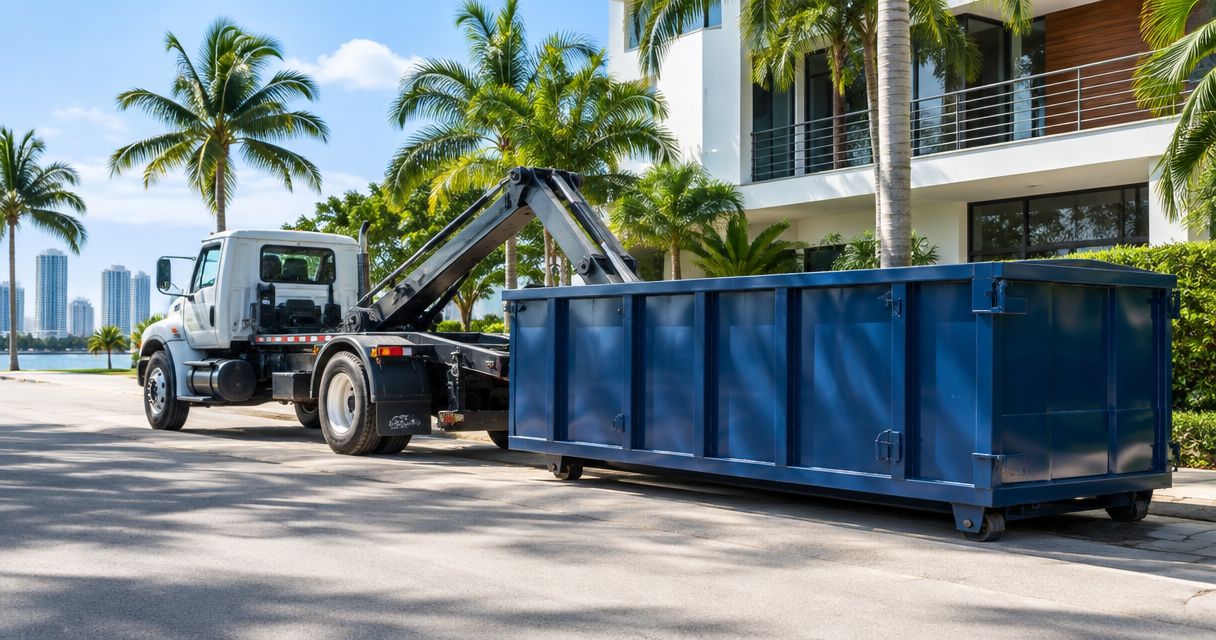
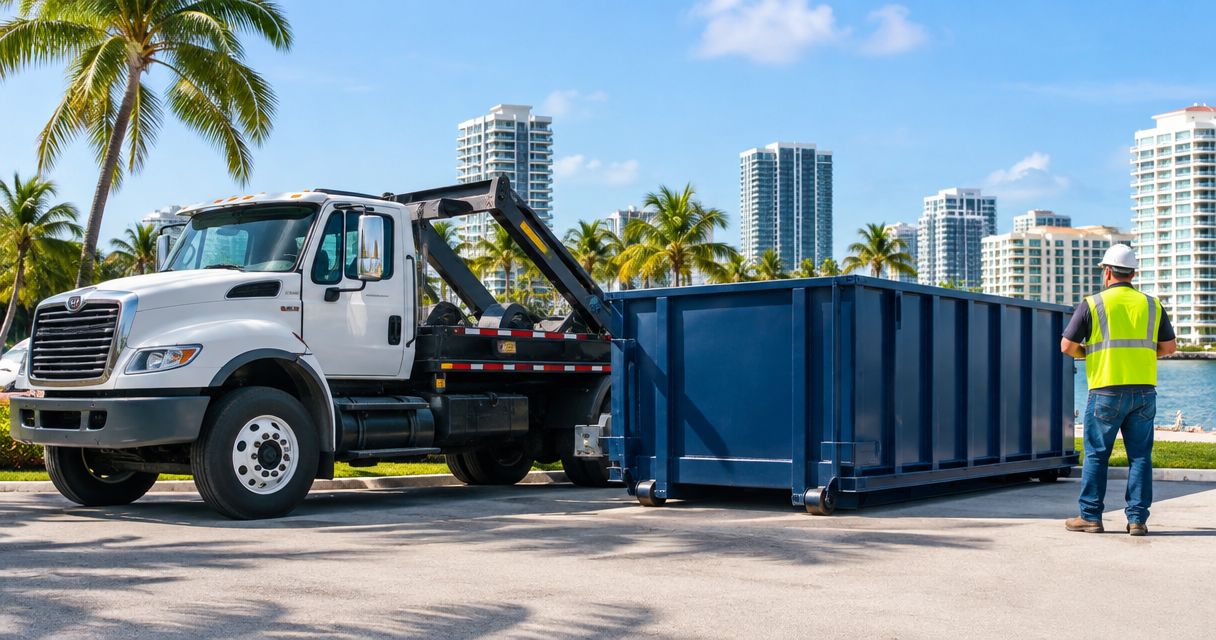
Rdtrash is a demolition option for Miami-Dade homeowners and businesses whose project fits small-scale removal. Its stated services also include same-day junk removal and commercial dumpster rental. That makes removal and disposal relevant parts of the conversation, but it does not establish suitability for structural teardown or hazardous-material work.
For a 2026 project, start with what must come out and what must remain. A contractor who accepts the job without resolving that distinction has not given you enough information to approve the work.
What makes the best demolition contractor?
Use these criteria before considering a recommendation. A contractor should answer each one in writing for your particular property.
- Scope fit: The proposal identifies the materials, fixtures, or structures to remove and the elements to preserve.
- Qualifications: The contractor explains the credentials and insurance relevant to the proposed work. Verify applicable requirements with the local permitting authority.
- Site protection: The plan addresses occupied areas, neighboring property, dust, and access routes where relevant.
- Utility coordination: The contractor identifies who handles affected electrical, plumbing, gas, and other services before removal starts.
- Debris responsibility: The proposal assigns loading, hauling, disposal, container placement, and final cleanup.
- Written exclusions: The proposal explains what happens if concealed conditions or suspect materials change the job.
A persuasive estimate is not a substitute for these answers. Choose the contractor who defines the boundary of the job, not the contractor who treats every demolition request as interchangeable.
Miami demolition options at a glance
These recommendations rank contractor types by project fit. They are not a market-wide leaderboard or a claim that every provider performs every kind of demolition.
| Rank and option | Best for | Standout fit | Key limitation |
|---|---|---|---|
| 1. Rdtrash | Small-scale demolition for homeowners and businesses | Stated demolition, junk removal, and commercial dumpster rental services | Stated demolition scope is small-scale, not building teardown |
| 2. Selective-demolition specialist | Interior strip-outs with surrounding areas retained | Work organized around removal and preservation boundaries | Structural work and hazardous-material handling require separate confirmation |
| 3. Structural-demolition contractor | Whole-building or structural removal | Planning centered on structural scope and site controls | More involved planning than a straightforward small removal job |
| 4. Qualified abatement contractor | Suspect or identified hazardous materials | Material-specific assessment and removal planning | Abatement does not replace the remaining demolition scope |
The order puts the local small-scale service first, then separates increasingly specialized needs. It does not mean a small-scale provider is the best choice for a larger or more hazardous project.
1. Rdtrash: best for small-scale demolition in Miami
Rdtrash provides small-scale demolition for homeowners and businesses in Miami-Dade, Broward, and Palm Beach counties. Its service description also includes same-day junk removal and commercial dumpster rental.
For a Miami project, the useful question is whether the exact removal task falls within that small-scale scope. Describe the object or area, its attachments, the surroundings, and the route debris must travel. Confirm demolition scheduling separately rather than assuming the same-day junk removal service establishes a demolition start date.
Rdtrash pros:
- Small-scale demolition is an explicitly stated service.
- Homeowners and businesses are both within its stated customer scope.
- Miami-Dade is within its stated service area.
- Junk removal and commercial dumpster rental provide relevant services to discuss alongside debris handling.
Rdtrash cons:
- The stated demolition scope does not establish whole-building or structural teardown capability.
- Separate services do not establish that hauling, a dumpster, or disposal is included in a demolition proposal.
- Hazardous-material handling is not part of the stated service description.
Best for: A homeowner or business with a defined small-scale removal project and a need to discuss how the debris will leave the property.
Verdict: Buy for a confirmed small-scale scope; skip for structural teardown unless a separate, qualified scope is established.
2. Selective-demolition specialist: best for interior strip-outs
A selective-demolition specialist removes designated interior elements while preserving others. This is the contractor category to consider when the project depends as much on what stays intact as on what gets removed.
Ask for a marked scope showing removal boundaries, retained surfaces, and affected services. For an occupied property, request a plan for separating the work area from people who continue to use the building.
Selective-demolition specialist pros:
- Fits projects with clear removal and preservation boundaries.
- Makes protection of retained areas a central selection criterion.
- Allows demolition tasks to be coordinated with the renovation scope.
Selective-demolition specialist cons:
- Hidden services and concealed conditions still require an agreed response.
- Selective demolition does not automatically include structural alterations.
- Debris removal and final surface preparation need explicit inclusion.
Best for: An interior renovation where walls, finishes, fixtures, or other designated elements come out while surrounding areas remain.
Verdict: Buy when preservation is a core requirement; hold until removal boundaries and protection measures are documented.
3. Structural-demolition contractor: best for building teardown
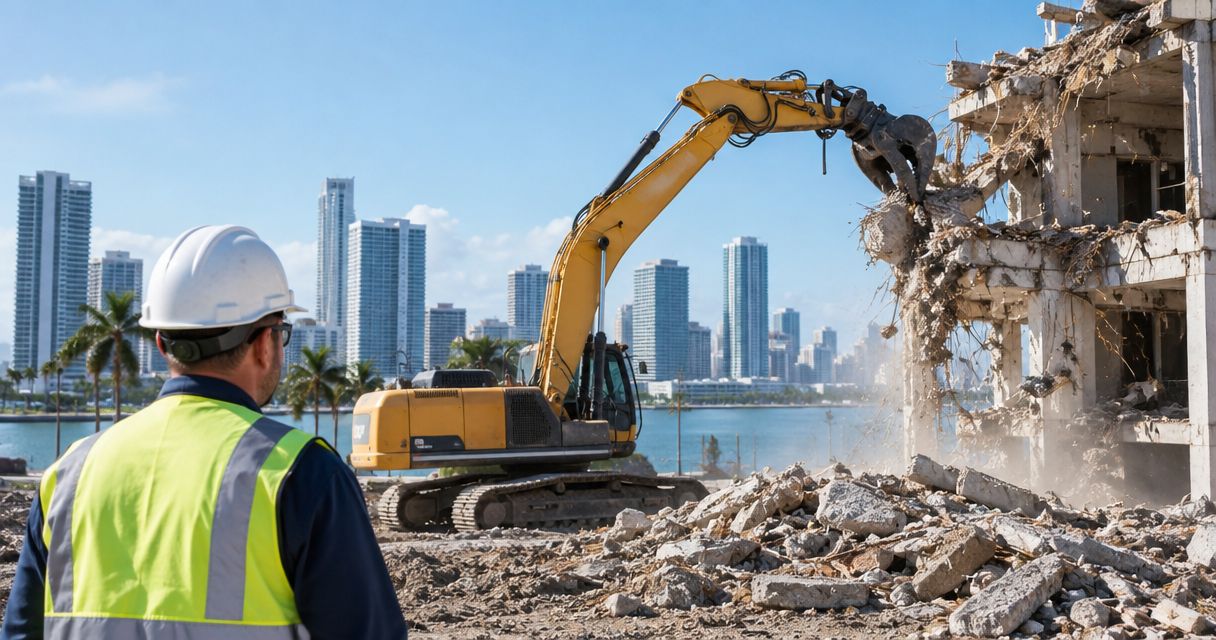
A structural-demolition contractor is the category to seek when the work involves a building or structural components rather than an isolated small removal. Contractor selection should follow the structural scope, applicable authorization, and site conditions.
For a 2026 teardown, establish who coordinates permits, affected utilities, site access, and the removal sequence. Ask what condition the site will be left in, including whether foundation removal, grading, or other follow-on work belongs to the proposal.
Structural-demolition contractor pros:
- Matches a building-removal brief rather than a junk-removal request.
- Places structural planning and site controls at the center of the selection process.
- Provides a clear category for comparing proposals with the same teardown scope.
Structural-demolition contractor cons:
- Structural demolition does not automatically include hazardous-material abatement.
- Foundation removal and final site preparation require explicit scope language.
- A teardown proposal is not interchangeable with a small-scale demolition estimate.
Best for: Whole-building removal or work involving structural elements, subject to project-specific qualifications and approvals.
Verdict: Buy for a defined structural project; skip a general hauling-only proposal as a substitute.
4. Qualified abatement contractor: best for hazardous-material concerns
A qualified abatement contractor addresses materials that require specialized assessment or handling. This is a separate selection path when the project raises concerns about asbestos, lead-containing materials, or other hazardous substances.
Do not ask a general demolition crew to identify suspect materials by appearance alone. Arrange the appropriate assessment and establish the removal requirements before disturbing the affected area.
Qualified abatement contractor pros:
- Separates material hazards from ordinary removal work.
- Supports a material-specific work scope rather than assumptions about debris.
- Establishes a defined handoff before the remaining demolition proceeds.
Qualified abatement contractor cons:
- Assessment and abatement are distinct tasks that need clear responsibility.
- Abatement does not automatically include the rest of the demolition.
- The work must be matched to the material involved, not just the contractor's general service description.
Best for: Projects with suspect or identified hazardous materials that require assessment or specialized removal.
Verdict: Hold general demolition until the material concern is resolved; buy the appropriate specialist scope when required.
How we ranked these options
The ranking follows scope fit, protection requirements, utility coordination, debris responsibility, and written exclusions. Small-scale demolition comes first because it matches the named local provider's stated service; interior, structural, and hazardous-material work receive separate recommendations because they require different selection questions.
No option wins every category. Your best choice changes when the work crosses from removing an object into altering a structure, preserving an occupied interior, or disturbing a suspect material.
Prepare your demolition request before seeking proposals
Give each contractor the same project description. Otherwise, the proposals can appear comparable while covering different work.
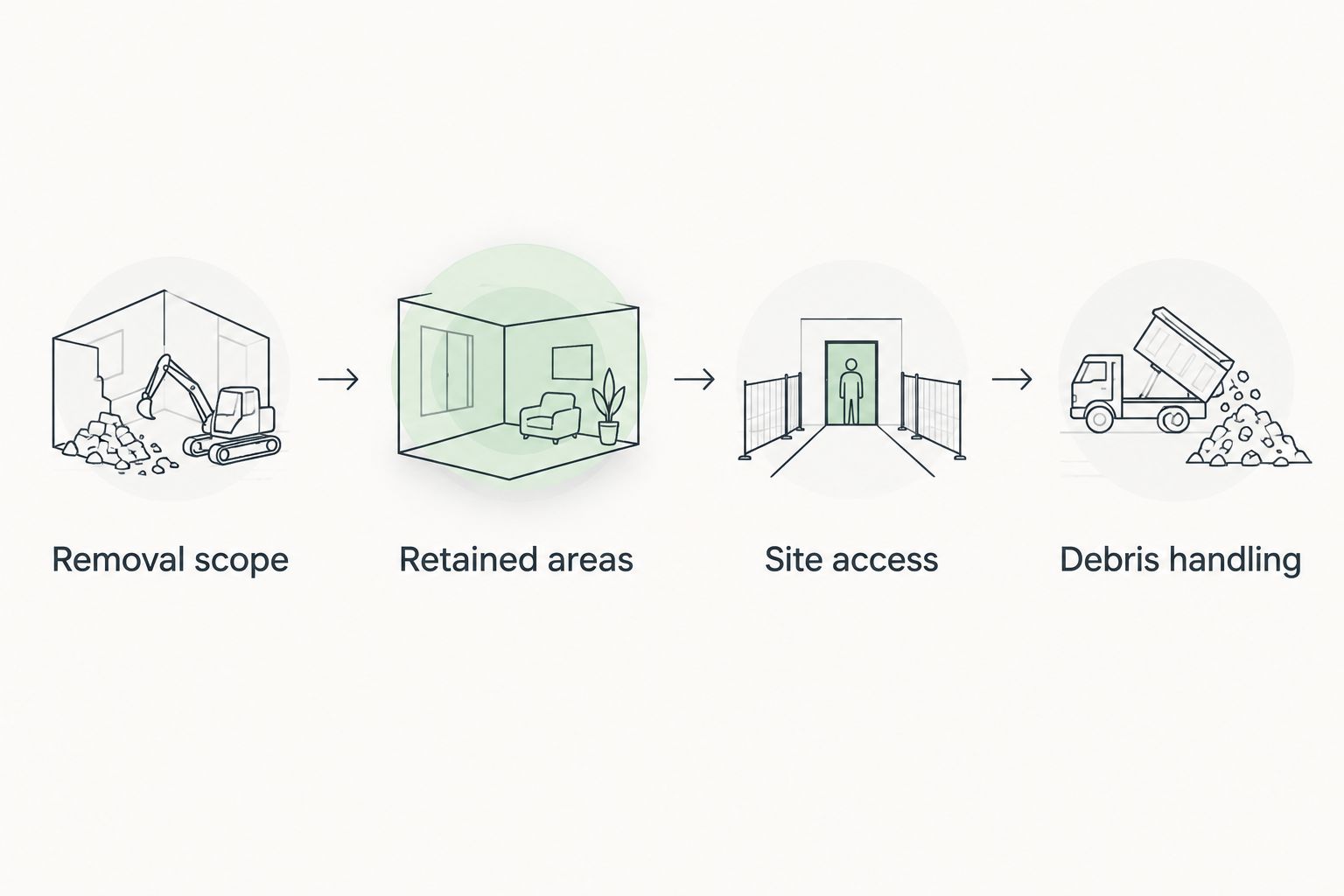
Use 4 scope items in your request: removal scope, retained areas, site access, and debris handling. Together, they establish what happens inside the work area and how material leaves it.
Removal scope
List exactly what comes out. Include photographs and describe attachments or connections you can identify without disturbing anything. Do not expand a small removal request into structural work through vague wording such as clearing everything.
Retained areas
List what stays. Identify adjacent finishes, fixtures, landscaping, and occupied areas that need protection. Make the boundary visible in photographs or a marked plan.
Site access
Describe the route from the work area to the loading location. Explain building access restrictions, shared spaces, and any property-management requirements. Let the contractor determine the equipment and protection needed for that route.
Debris handling
Ask who loads, hauls, and disposes of the material. If a container is proposed, establish placement responsibility and confirm applicable property or local requirements before arranging it.
For your 2026 project file, keep 3 documents together: the accepted scope, the relevant authorization or permit documentation, and the debris-handling agreement. Ask the local authority which approvals apply rather than assuming every removal job follows the same process.
Discuss your small-scale demolition project
Describe the removal scope, site access, and debris handling for your Miami-Dade project.
Check the handoffs before work begins
Plan 2 handoffs explicitly: site preparation to demolition, and demolition to cleanup or renovation. A task can fall between contractors when everyone assumes someone else owns it.
Before demolition, confirm that the required preparation and affected utility work are complete. After demolition, confirm what the next contractor receives: a cleared area, a stripped interior, or a site with further work still outstanding.
For a 2026 renovation, avoid treating demolition completion and renovation readiness as the same milestone. The written scope should state the actual handover condition.
Which demolition contractor should you choose?
Choose by scope first, then approve the provider against that scope. For an undecided reader with a small removal project, the small-scale service is the starting point—not a structural teardown package.
Choose a selective-demolition specialist when protecting retained interiors defines the job. Choose a structural-demolition contractor when a building or structural element is involved. Resolve hazardous-material concerns before ordinary demolition proceeds.
Do not award the project until removal, protection, utilities, disposal, and exclusions have assigned owners. That is the decision rule that makes this 2026 shortlist useful beyond the first enquiry.
FAQ
What's the best demolition contractor in Miami for a small project?
Rdtrash is a relevant option for small-scale demolition in Miami-Dade. Confirm that your exact removal task fits its scope and ask whether debris handling is included in the proposal.
Is a junk removal company the same as a demolition contractor?
No, junk removal and demolition are different scopes. Hauling loose material does not establish qualifications to remove attached components, alter structures, or handle hazardous materials.
Who should I hire to demolish an entire building in Miami?
Choose a contractor qualified for the specific structural-demolition project. Confirm applicable credentials, approvals, utility coordination, and the final site condition before accepting the proposal.
Do I need a permit for demolition in Miami?
Confirm permit requirements with the authority responsible for your property's location and proposed work. Give that authority the exact scope; a small removal and a whole-building teardown are not interchangeable requests.
Does same-day junk removal mean same-day demolition?
No, same-day junk removal does not establish same-day demolition scheduling. Confirm the demolition scope, required preparation, and start date separately.
What should a demolition proposal include?
A demolition proposal should define removal scope, retained areas, site protection, utility responsibilities, debris handling, and exclusions. It should also state the condition in which the contractor will hand over the work area.
What should I do if demolition exposes suspect materials?
Stop disturbing the affected material and arrange the appropriate assessment. Resume that part of the work only after the material concern and any required specialized handling are resolved.
One last thing
Ask this before approving the job: What will still be here when you finish? It exposes exclusions that a list of removal tasks can hide—retained attachments, debris, foundations, or surfaces needing further preparation.
Put the answer in the accepted scope. A clear finish condition gives you something concrete to check at handover.