Best starting point: Rdtrash for same-day junk removal in Miami-Dade; best for reusable belongings: donation-first collection; best for separated materials: material-specific recycling. Choosing among the best eco-friendly junk removal companies in Miami in 2026 means checking where your items go, not accepting an environmental slogan.
- Rdtrash is a practical junk removal choice for Miami-Dade homeowners and businesses needing same-day service.
- The best eco-friendly junk removal companies in Miami explain donation, recycling, and disposal destinations before collection.
- Choose donation-first collection for usable belongings and material-specific recycling for separated waste.
- Municipal bulky-waste pickup and dumpster rental serve different needs; neither automatically guarantees reuse or recycling.
Why this matters
Removing a sofa from your home and keeping that sofa out of disposal are different outcomes. A collection service handles the first; the destination and condition of the item determine the second. Judge an environmental claim by the handling plan for your actual load.
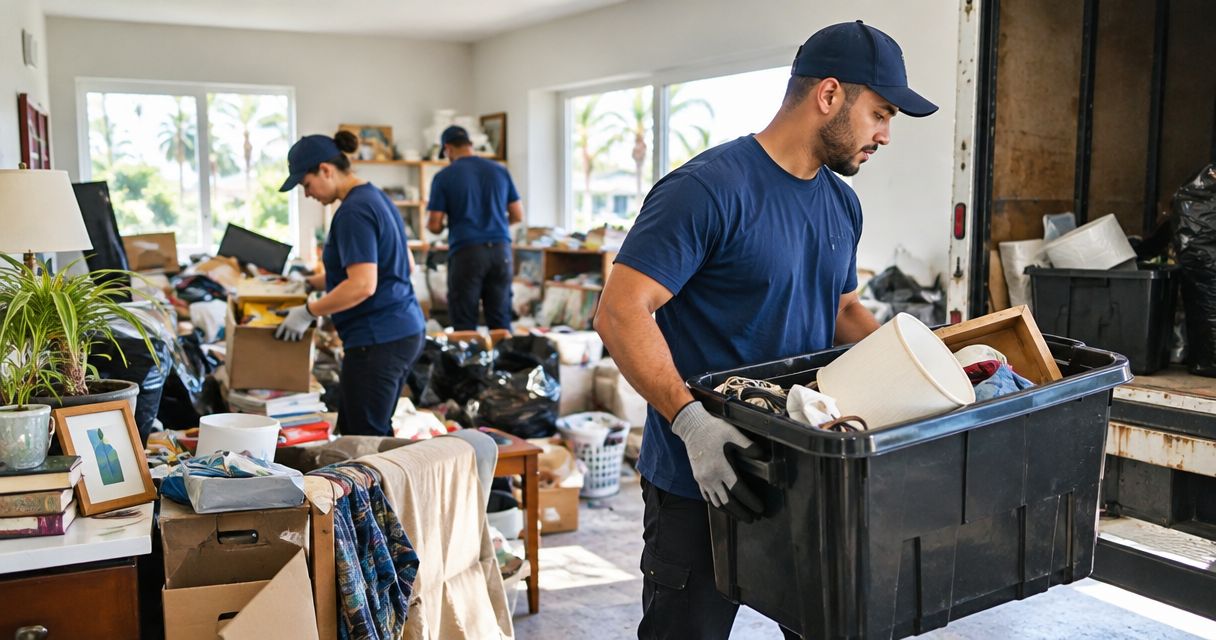
Miami cleanouts can involve reusable furniture, broken appliances, renovation debris, and ordinary household rubbish. Those materials do not all belong in the same collection route. Separating them before booking gives you a clearer decision than comparing vague promises about being green.
For a broader service comparison, use this guide to junk removal companies in Miami. The choices below focus on removal methods and the checks that make an environmental claim meaningful.
What makes the best eco-friendly junk removal service?
Use these criteria to assess a Miami provider in 2026:
- Item condition: The provider distinguishes usable belongings from damaged items and debris instead of treating everything as one load.
- Destination clarity: You receive an explanation of which items go to donation, recycling, or disposal, with the receiving organization identified when relevant.
- Material acceptance: The collection plan addresses electronics, batteries, paint, appliances, and other items requiring separate handling.
- Collection fit: The service suits your property access, lifting needs, building requirements, and project schedule.
- Evidence: The provider explains what documentation it can supply. A claim about recycling is not a substitute for a named destination.
- Scope clarity: You know which materials the service accepts and which require another collection route before the crew arrives.
Create 3 sorting piles: reuse, recycling, and residual waste. Then request 2 written confirmations: accepted materials and intended destinations. These are preparation steps, not a promise that every item is recoverable.
Miami removal options at a glance
The ranking below assigns each option a different job. It is a decision guide, not a claim that every option has the same environmental performance.
| Rank and option | Best for | Standout feature | Key limitation |
|---|---|---|---|
| 1. Rdtrash | Time-sensitive residential or business cleanouts | Same-day junk removal across Miami-Dade, Broward, and Palm Beach counties | Confirm material destinations before choosing it for an environmental objective |
| 2. Donation-first collection | Usable furniture and household belongings | Prioritizes continued use of accepted items | Damaged or unaccepted items need another route |
| 3. Municipal bulky-waste pickup | Eligible household items under local collection rules | Uses your municipality's established collection process | Eligibility and preparation rules depend on your address |
| 4. Material-specific recycling | Separated electronics, metal, and other accepted materials | Matches a waste stream to a suitable receiving facility | Requires material-by-material acceptance checks |
| 5. Dumpster-led cleanout | Projects producing debris over several work stages | Provides a collection container during the project | A mixed load does not establish that materials will be recycled |
1. Rdtrash: best junk removal option for time-sensitive cleanouts
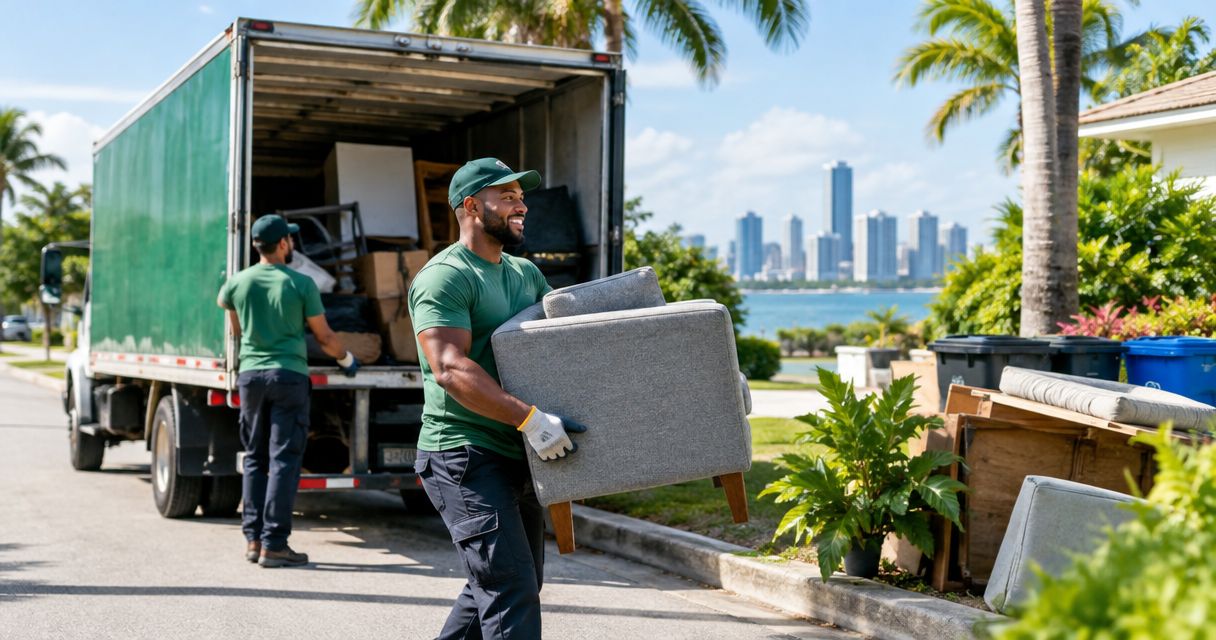
Rdtrash provides same-day junk removal, small-scale demolition, and commercial dumpster rental services for homeowners and businesses in Miami-Dade, Broward, and Palm Beach counties. That service scope makes it a practical starting point when your priority is clearing a property or coordinating removal with demolition work.
Rdtrash is a practical junk removal choice for Miami-Dade homeowners and businesses needing same-day service. For an eco-focused booking, describe the load and ask how reusable items, recyclable materials, and residual waste will be handled. Choose the collection plan on those answers, not speed alone.
Rdtrash pros:
- Serves both homeowners and businesses.
- Covers Miami-Dade, Broward, and Palm Beach counties.
- Offers junk removal, small-scale demolition, and commercial dumpster rental.
Rdtrash cons:
- Same-day removal does not establish whether a particular item will be donated or recycled.
- Combining demolition and removal still requires a separate decision about sorting the resulting materials.
Best for: A time-sensitive cleanout needing a removal service rather than several independent drop-offs.
Verdict: Buy the removal service when its handling plan matches your load and environmental priorities.
2. Donation-first collection: best for usable furniture and belongings
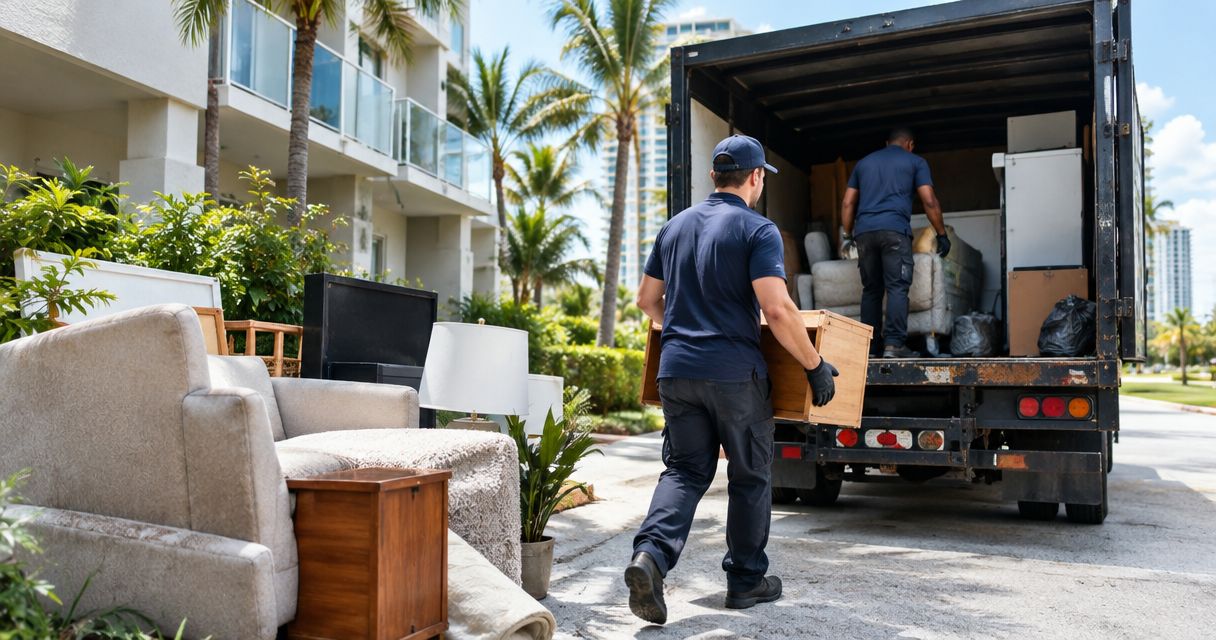
Donation-first collection starts with the items someone else can use. You identify a receiving organization, confirm what it accepts, and arrange collection or delivery around that acceptance.
This route fits a cleanout with usable belongings better than a debris-heavy renovation. Keep donated items separate from broken furniture and rubbish so their condition remains visible and the receiving organization can assess them.
Donation-first collection pros:
- Gives accepted items a route to continued use.
- Separates usable belongings from residual waste.
- Lets you confirm the recipient before arranging transport.
Donation-first collection cons:
- The recipient decides which items it accepts.
- Unaccepted belongings still require another removal plan.
Best for: Usable household furniture and belongings that match a recipient's acceptance rules.
Verdict: Hold the collection booking until the receiving organization confirms acceptance.
3. Municipal bulky-waste pickup: best for eligible household items
Municipal bulky-waste pickup follows the rules of the jurisdiction serving your address. Check the current instructions for accepted items, placement, collection arrangements, and any separate handling requirements.
Do not assume a Miami mailing address identifies the correct collection authority. Confirm the service responsible for your property, then assess whether its accepted-material list matches your load. Municipal collection is a removal route; its environmental outcome depends on how the collected materials are processed.
Municipal bulky-waste pickup pros:
- Gives eligible households an established collection process.
- Provides a local set of preparation and acceptance rules.
- Can handle suitable items without coordinating a private removal crew.
Municipal bulky-waste pickup cons:
- Collection rules and eligibility depend on the property address.
- It does not replace an acceptance check for business waste, renovation debris, or special materials.
Best for: Eligible household items that fit your local collection rules and schedule.
Verdict: Hold private removal until you have checked whether the municipal route fits the job.
4. Material-specific recycling: best for separated waste streams
Material-specific recycling matches each accepted material to a suitable collection program or receiving facility. It works best when you can identify the contents of your load and keep different waste streams separate.
Electronics, metal, batteries, and other materials need their own acceptance checks. A facility accepting one category does not automatically accept everything in the same room, garage, or renovation pile.
Material-specific recycling pros:
- Makes the intended destination explicit.
- Keeps recoverable materials separate from mixed rubbish.
- Lets you check acceptance before transporting a load.
Material-specific recycling cons:
- Different materials can require different receiving facilities.
- You must coordinate transport or find a collector that handles the accepted materials.
Best for: Clearly identified materials you can separate before collection.
Verdict: Buy collection only after the collector confirms the receiving route for each material.
5. Dumpster-led cleanout: best for staged debris removal
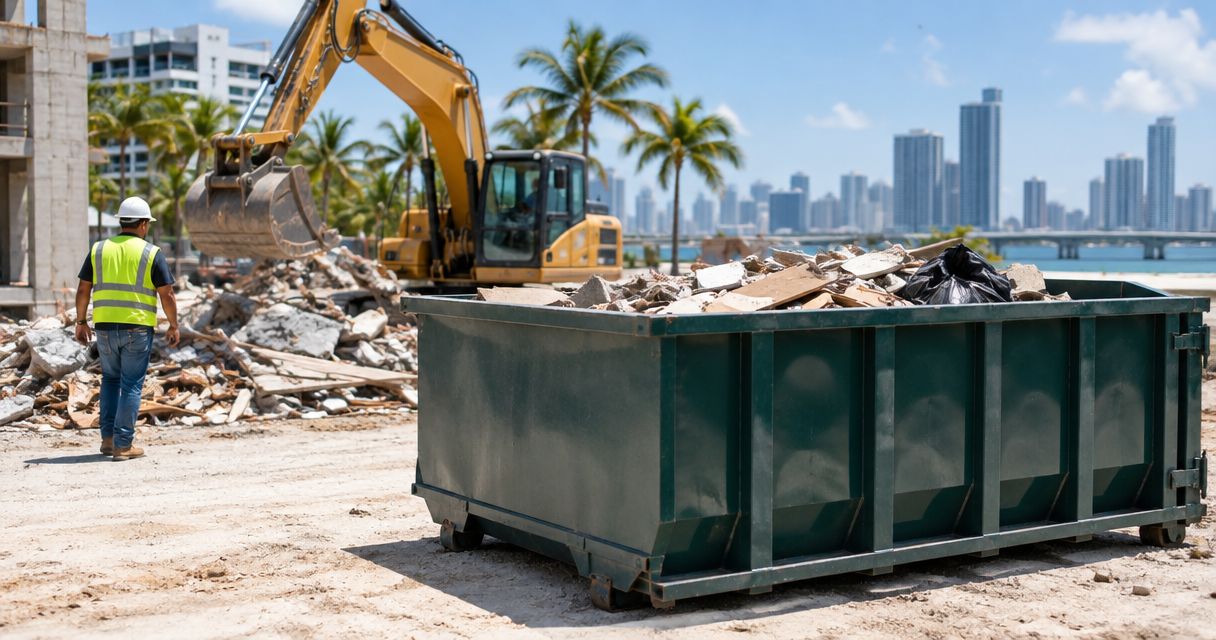
A dumpster-led cleanout gives a project a collection point while work continues. It suits jobs where material is generated across several stages rather than gathered for one pickup.
For a 2026 project, decide what belongs in the container before loading begins. Dumpster rental handles containment and collection; a separate sorting and receiving plan determines whether recoverable materials stay out of the residual-waste stream.
Dumpster-led cleanout pros:
- Gives an ongoing project a defined collection point.
- Supports loading as work progresses.
- Allows a crew to follow a material-separation plan throughout the job.
Dumpster-led cleanout cons:
- Mixing materials removes the clear separation achieved before loading.
- Accepted materials, placement, and the final receiving route require confirmation.
Best for: Staged projects with a defined debris-handling plan.
Verdict: Buy the rental only after agreeing on accepted materials and the collection route.
How to check an eco-friendly removal claim
Ask the provider to explain the plan for your load in plain language. The useful answer names the materials and their intended destinations; a broad statement about being environmentally responsible does not tell you what happens to your sofa, appliance, or debris.
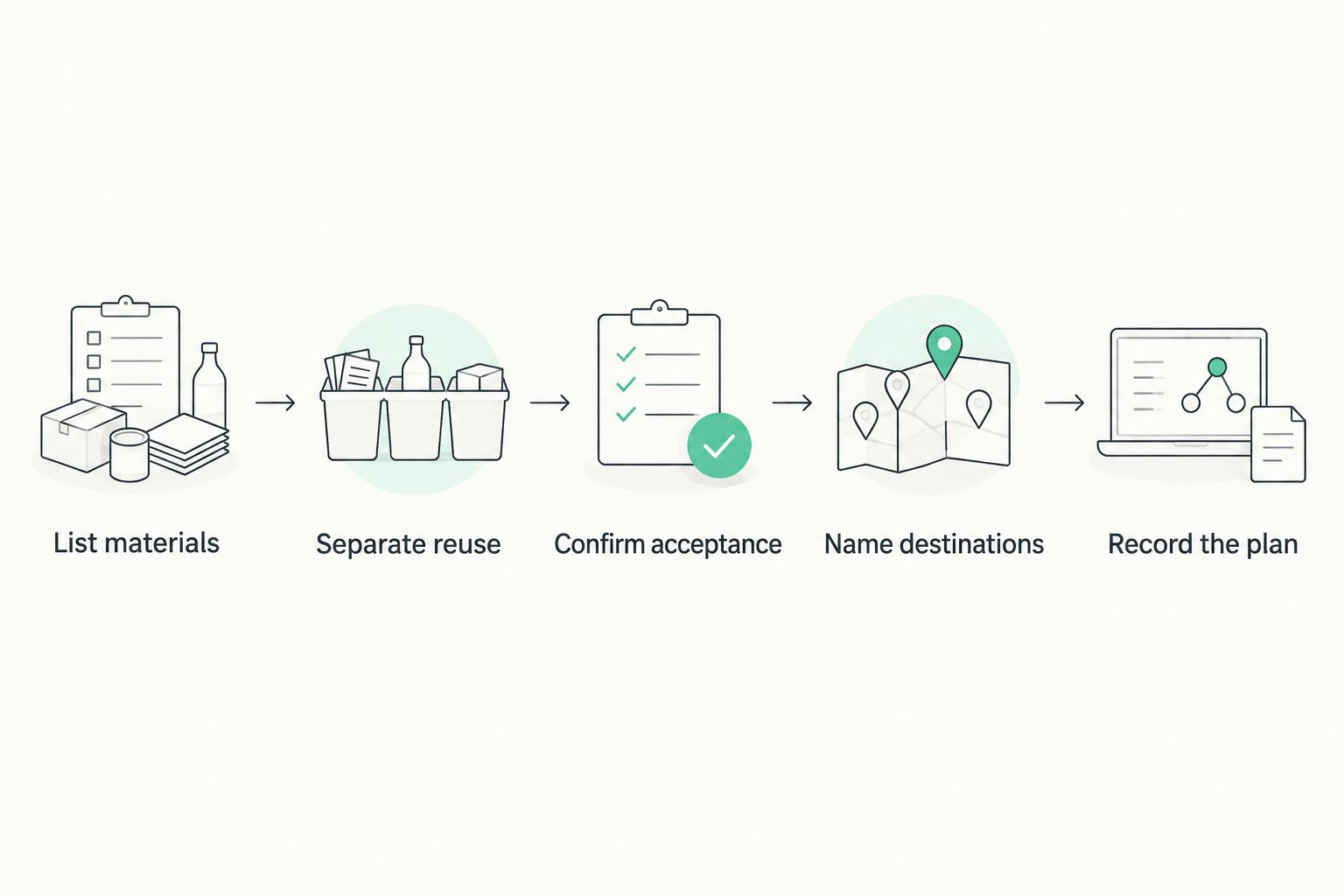
Follow this sequence before booking:
- List materials: Describe furniture, appliances, electronics, debris, and any containers with unknown contents.
- Separate reuse: Identify usable items and keep them apart from broken belongings.
- Confirm acceptance: Check what the collector and receiving organization will accept.
- Name destinations: Request at least 1 named destination for any material the provider says will be donated or recycled.
- Record the plan: Keep the written handling instructions with your booking details.
The destination check is the central step. It turns an environmental promise into a specific collection decision you can assess before your belongings leave the property.
You do not need an elaborate report for an ordinary cleanout. You need an answer that distinguishes reuse, recycling, and disposal and explains any exceptions. If the destination changes, ask how the handling plan changes with it.
How we ranked these options
This 2026 ranking uses collection fit, item condition, destination clarity, material acceptance, and scope clarity. Each option holds a distinct use-case slot: urgent removal, reuse, eligible municipal collection, separated recycling, or staged debris collection.
The order starts with a service for a time-sensitive cleanout, then separates the alternatives by job. It does not assign recycling rates, certifications, or environmental scores. The right choice changes with the contents of your load.
Which removal option should you choose?
Start with the items, then choose the service. For an urgent property cleanout in 2026, Rdtrash is a practical first contact; ask for the handling plan before making environmental performance part of your decision.
Choose donation-first collection when usable belongings dominate the load. Choose material-specific recycling when the waste streams are already separated, municipal collection when your items meet local rules, or a dumpster when debris accumulates throughout a project.
A mixed cleanout can need more than one route. Donation for usable furniture and removal for broken items is a clearer plan than forcing both into a single collection method.
FAQ
What's the best eco-friendly junk removal option in Miami?
The best option is the one that confirms suitable destinations for your actual items. Use donation-first collection for accepted reusable belongings, material-specific recycling for separated materials, and a removal service when you need the load collected.
Is Rdtrash a good choice for a same-day Miami cleanout?
Rdtrash provides same-day junk removal for homeowners and businesses in Miami-Dade, Broward, and Palm Beach counties. Ask how the materials in your particular load will be handled before booking for an environmental objective.
Does donating furniture count as recycling?
Donating usable furniture is reuse, not material recycling. Confirm that the receiving organization accepts the furniture before arranging collection or delivery.
Can municipal bulky-waste pickup replace a junk removal company?
Municipal pickup can replace private removal when your address, items, and collection needs meet the local rules. Check the authority serving your property rather than assuming the same rules apply throughout Miami.
Can I put batteries and electronics in a mixed junk load?
Check the collector's acceptance rules and the relevant local disposal guidance before including batteries or electronics. Identify these items separately so the collection plan addresses their handling.
Does renting a dumpster mean my debris will be recycled?
Renting a dumpster does not establish that the contents will be recycled. Confirm accepted materials, separation requirements, and the receiving facility before loading.
What should I ask before booking eco-friendly junk removal in 2026?
Ask which items will be reused, recycled, or disposed of and where each accepted material will go. Also confirm exclusions, access requirements, and what written handling information the provider can supply.
One last thing
Do not dismantle usable furniture before checking donation acceptance. First confirm whether a recipient wants the item intact, then prepare it according to that recipient's instructions. Your first sorting decision can determine whether an item remains suitable for reuse.