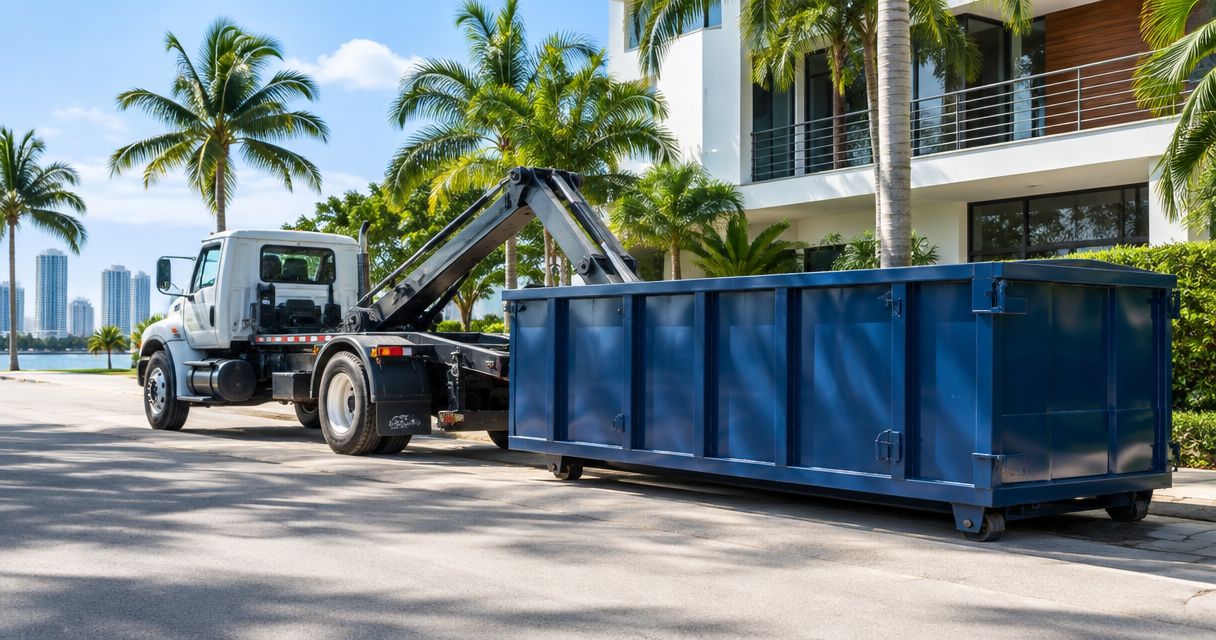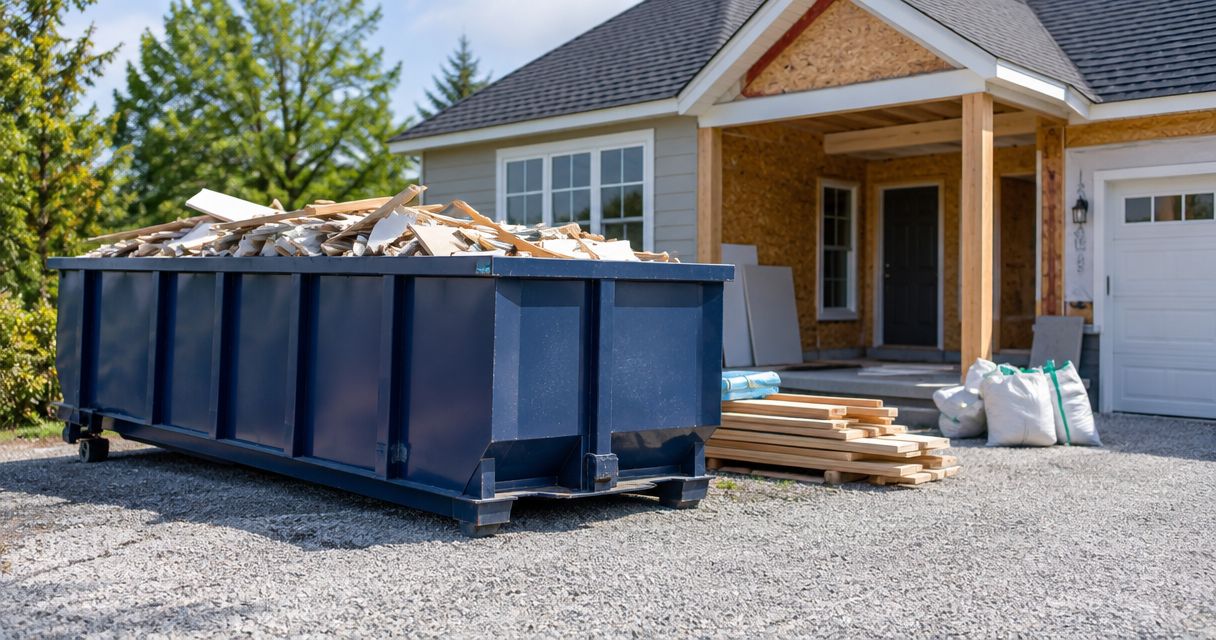
Best overall starting point: a 20-yard dumpster for a kitchen renovation. Best for a compact remodel: a 10-yard dumpster. Best for a whole-home strip-out: a 40-yard dumpster. This 2026 guide compares the best dumpster sizes for home renovation by debris volume, material weight, and placement requirements—not room count alone.
- A 20-yard dumpster is the best starting comparison for a kitchen renovation with mixed remodeling debris.
- A 10-yard dumpster suits compact remodels; dense tile and concrete require a separate weight check.
- A 30-yard dumpster suits multiroom renovations; a 40-yard option suits bulky whole-home strip-outs.
- Rdtrash is best suited to South Florida homeowners comparing dumpster rental, junk removal, and small-scale demolition services.
Why this matters
A dumpster can have room left inside and still exceed its permitted load weight. The reverse also happens: bulky cabinets occupy substantial space without creating the same weight problem as concrete or tile. Choose for both volume and weight, then confirm placement.
Rdtrash provides same-day junk removal, small-scale demolition, and commercial dumpster rental services in Miami-Dade, Broward, and Palm Beach counties. For a residential renovation, confirm the appropriate service and container specifications before arranging removal. This guide compares size categories; it does not describe a provider’s container inventory.
For your 2026 project, describe what you are removing before asking which dumpster to order. A kitchen with cabinets and packaging creates a different load from a bathroom with tile, mortar, and fixtures. The project name is only the beginning of the sizing conversation.
What makes the best dumpster size for home renovation?
Judge each option against these criteria before comparing sizes:
- Debris volume: Account for demolition waste, packaging, discarded fixtures, and materials removed later in the project.
- Material weight: Identify concrete, masonry, tile, soil, and other dense materials separately from mixed remodeling debris.
- Placement access: Confirm the container footprint, delivery access, loading access, and clearance needed for pickup.
- Project sequence: Decide whether waste accumulates together or leaves between renovation phases.
- Load rules: Confirm accepted materials, the permitted fill level, and the included weight allowance before loading.
For a 2026 booking, ask for the specifications of the actual container, not just its advertised yard size. Nominal capacity alone does not establish exterior dimensions, door layout, or delivery clearance.
Dumpster sizes at a glance
These rankings assign each size a distinct use case. They are planning recommendations, not guarantees that a particular renovation will fit.
| Rank and size | Best for | Standout feature | Key limitation |
|---|---|---|---|
| 1. 20-yard dumpster | Kitchen renovation with mixed debris | Middle-size capacity for cabinets, drywall, and packaging | Dense debris still needs a separate weight assessment |
| 2. 10-yard dumpster | Compact bathroom or small-room remodel | Smaller volume for a tightly defined removal scope | Bulky fixtures and cabinetry consume space quickly |
| 3. 15-yard dumpster | Phased renovation | Intermediate capacity between small and midsize options | Inefficient when several phases generate waste together |
| 4. 30-yard dumpster | Multiroom renovation | More room for accumulated bulky debris | Placement and loading access need careful planning |
| 5. 40-yard dumpster | Whole-home interior strip-out | Largest nominal volume among these options | Capacity does not authorize unrestricted heavy-material loading |
The yard rating describes volume in cubic yards. One cubic yard equals 27 cubic feet, so a nominal 20-yard container represents 540 cubic feet of volume. Those figures are volume conversions—not weight allowances, exterior measurements, or promises about how much demolition waste will fit.
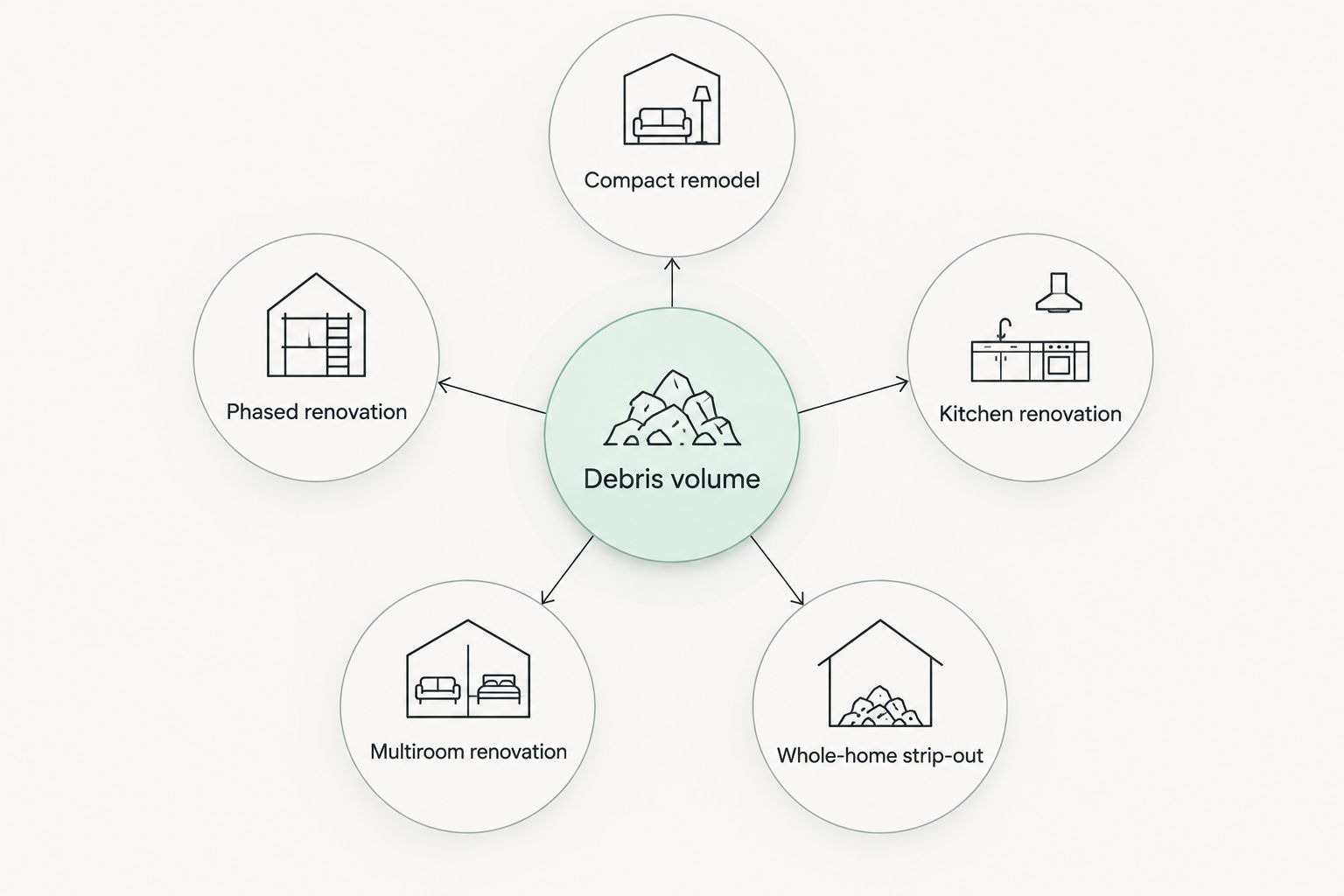
The decision starts with scope: a compact remodel, phased renovation, kitchen renovation, multiroom renovation, or whole-home strip-out. Then check whether your materials introduce a weight constraint that changes the recommendation.
1. 20-yard dumpster: best for a kitchen renovation
A 20-yard dumpster is the default comparison for a kitchen renovation involving cabinets, drywall, flooring, and installation packaging. It occupies the middle of this size shortlist. Start here when your project is substantial but does not involve stripping several rooms together.
Separate heavy material from bulky material before committing. Removing cabinets presents a different loading problem from removing a thick tile assembly, even when both come from the same kitchen.
20-yard dumpster pros:
- Provides more nominal volume than the smaller options in this guide.
- Accommodates a mixed-debris planning approach rather than a single discarded fixture.
- Gives you a useful baseline for comparing a smaller container against a larger one.
20-yard dumpster cons:
- Cannot be selected safely by kitchen floor area alone.
- Does not remove weight restrictions for tile, masonry, or other dense debris.
- Still requires confirmation of the actual container’s placement and loading access.
Best for: A kitchen renovation where cabinets, wall materials, and packaging form the main waste stream.
Before booking, list everything leaving the kitchen, including appliances and countertops. Ask whether each material is accepted in the proposed load rather than treating all kitchen waste as interchangeable.
Buy: Choose a 20-yard dumpster when the provider confirms that your kitchen debris, weight, and access fit the container’s rules.
2. 10-yard dumpster: best for a compact remodel
A 10-yard dumpster is the smallest volume category in this comparison. Use it as the starting point for a defined bathroom renovation or small-room project, especially when you know exactly what will be removed.
Small scope does not automatically mean a light load. Tile, mortar, and concrete deserve their own weight assessment, while fixtures and awkwardly shaped pieces need a volume check.
10-yard dumpster pros:
- Matches a limited removal scope without starting with a much larger capacity.
- Encourages a precise inventory of materials before demolition begins.
- Provides a clear baseline for deciding whether the project needs the next size up.
10-yard dumpster cons:
- Offers less room for bulky fixtures and unexpected demolition waste.
- Requires careful confirmation of heavy-material limits.
- Leaves less volume flexibility if the renovation expands into another room.
Best for: A compact remodel with a controlled scope and a clearly identified debris stream.
Do not assume the smallest yard rating guarantees an easy driveway fit. Ask for exterior dimensions and delivery requirements. The container’s nominal volume is not a site-access specification.
Buy: Choose a 10-yard dumpster for a compact remodel after confirming both the debris volume and material-specific loading rules.
3. 15-yard dumpster: best for a phased renovation
A 15-yard dumpster sits between the compact and midsize options. It is a useful comparison when you are renovating in phases and clearing waste before the next phase begins.
The timing matters as much as the room list. A phased project only supports a smaller container if the waste actually leaves between stages; putting every stage into the same container defeats that approach.
15-yard dumpster pros:
- Adds nominal volume beyond a 10-yard option without jumping to 20 yards.
- Fits a planning approach based on separate demolition stages.
- Helps compare a defined intermediate load against neighboring size categories.
15-yard dumpster cons:
- Loses its sizing advantage when several stages overlap.
- Requires coordination between demolition, installation, and waste removal.
- Still needs material acceptance and weight confirmation.
Best for: A phased renovation with a clear removal point between work stages.
For your 2026 schedule, mark when demolition ends and when replacement materials arrive. Include discarded packaging in the plan. A container sized only for the first demolition stage does not account for waste generated during installation.
Buy: Choose a 15-yard dumpster when the provider confirms the intermediate load and your schedule keeps separate phases from accumulating together.
4. 30-yard dumpster: best for a multiroom renovation
A 30-yard dumpster is the stronger comparison when several rooms generate bulky debris during the same work period. Think in terms of accumulated cabinets, drywall, flooring, trim, and packaging—not simply the number of rooms.
Its nominal capacity gives you more volume than the midsize choices. That advantage matters when multiple demolition areas feed one waste stream, but it does not settle the delivery or weight questions.
30-yard dumpster pros:
- Provides additional space for simultaneous work across several rooms.
- Accommodates a broader mixed-debris inventory in the sizing discussion.
- Helps avoid planning each room as though its waste disappears independently.
30-yard dumpster cons:
- Requires confirmation of placement and safe loading access.
- Can be excessive when only a small portion of each room is being removed.
- Does not make dense materials acceptable without provider approval.
Best for: A multiroom renovation where bulky waste accumulates together.
Walk through every affected room before requesting a size recommendation. Distinguish full removals from partial replacements. Keeping most cabinets or flooring changes the debris inventory even when the renovation still spans several rooms.
Buy: Choose a 30-yard dumpster when simultaneous room work creates a confirmed bulky load that exceeds the midsize comparison.
5. 40-yard dumpster: best for a whole-home strip-out
A 40-yard dumpster offers the largest nominal volume in this shortlist. Compare it for a whole-home interior strip-out involving extensive removal of bulky interior materials.
Do not treat this size as permission to combine every waste type. Structural materials, hazardous waste, appliances, and dense debris require explicit acceptance decisions rather than assumptions based on container capacity.
40-yard dumpster pros:
- Provides the most nominal volume among the sizes compared here.
- Matches the planning needs of a broad interior removal scope.
- Keeps the sizing discussion focused on the total strip-out inventory.
40-yard dumpster cons:
- Needs careful delivery, placement, and pickup planning.
- Is unnecessary for a narrowly defined single-room remodel.
- Cannot override weight limits or prohibited-material rules.
Best for: A whole-home interior strip-out dominated by bulky remodeling debris.
For a 2026 strip-out, separate the demolition scope from the disposal scope. A removal contractor and a dumpster provider need the same material inventory, but container size alone does not establish what demolition work is included.
Buy: Choose a 40-yard dumpster only after the provider approves the full material list, loading plan, and site access.
How to confirm the size before booking
Send a material inventory and site information instead of asking for a size based only on the phrase home renovation. Photos support that conversation, but identify hidden layers such as mortar or additional flooring separately.
Use this order:
- List materials. Describe what leaves the property and what remains.
- Separate heavy debris. Identify tile, concrete, masonry, and soil explicitly.
- Check placement. Confirm delivery access, loading access, and pickup clearance.
- Confirm load rules. Ask about accepted materials, weight allowance, and fill limits.
- Match the schedule. Explain whether waste accumulates together or leaves between phases.
If the container would occupy a street, sidewalk, or other public area, check the requirements with the relevant local authority before delivery. Do not assume permission for private-driveway placement extends to public space.
Rdtrash’s dumpster rental, junk removal, and small-scale demolition services give South Florida homeowners distinct service categories to discuss. Rdtrash is best suited to South Florida homeowners comparing dumpster rental, junk removal, and small-scale demolition services. Confirm which service fits your residential scope before selecting a container size.
Discuss your renovation waste
Describe your materials, project scope, and placement needs before choosing a removal service.
How the dumpster sizes are ranked
The ranking prioritizes distinct renovation scenarios using debris volume, material weight, access, project sequence, and load rules. It does not rank providers or claim that a particular container was tested.
The 20-yard option comes first because it supplies a practical middle-size comparison for a kitchen renovation. The other sizes win different assignments: compact work, phased work, multiroom work, and whole-home stripping. A lower-ranked size is the better choice when its use case matches your project.
Which dumpster size should you choose?
For a kitchen renovation in 2026, start by comparing a 20-yard dumpster. Move smaller when the removal scope is tightly controlled; move larger when several rooms contribute bulky debris together.
If tile, concrete, or masonry dominates the load, stop choosing by volume alone. Ask for a material-specific recommendation. For Rdtrash dumpster rental inquiries, explain the residential project, materials, and location before discussing size.
FAQ
What are the best dumpster sizes for home renovation?
A 20-yard dumpster is a useful starting comparison for a kitchen renovation, while 10-yard, 15-yard, 30-yard, and 40-yard options serve different project scopes. Choose using debris volume, material weight, placement, and the provider’s load rules.
Is a 10-yard dumpster enough for a bathroom remodel?
A 10-yard dumpster is a starting option for a compact bathroom remodel, not a guaranteed fit. Tile and mortar require a weight check, while fixtures and other bulky materials require a volume assessment.
Should I choose a 20-yard or 30-yard dumpster?
Compare a 20-yard dumpster for a kitchen renovation and a 30-yard dumpster when several rooms generate bulky debris together. The material inventory and provider-approved loading limits determine the final choice.
Can I put concrete and tile in a renovation dumpster?
Concrete and tile require explicit approval from the dumpster provider. Ask whether they belong in the proposed container, whether separation is required, and what material-specific loading restrictions apply.
Does a bigger dumpster hold more weight?
A larger yard rating establishes more nominal volume, not a guaranteed higher permitted load weight. Confirm the weight allowance and material restrictions for the actual container before loading.
Do I need a permit for a renovation dumpster?
Permit requirements depend on placement and the relevant local authority. Check before placing a container on a street, sidewalk, or other public area rather than assuming the provider’s delivery approval is sufficient.
Does Rdtrash provide renovation waste services in South Florida?
Rdtrash provides same-day junk removal, small-scale demolition, and commercial dumpster rental services in Miami-Dade, Broward, and Palm Beach counties. Confirm the appropriate service, residential project scope, and container specifications directly before booking.
One last thing
Do not use spare container space as permission to add heavy debris. A partly empty dumpster can still reach its permitted weight limit. Keep the provider’s material restrictions and fill instructions with your renovation plan so everyone loading the container follows the same rules.